Consume any food, but do so with caution.
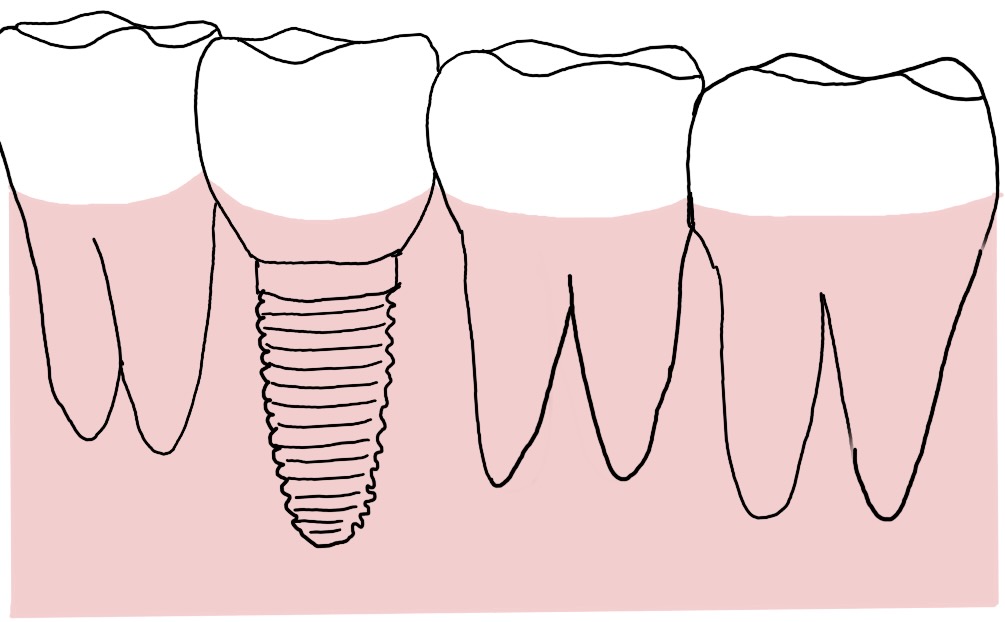
Dental implants are quite robust, and you may eat regular meals as long as you don’t do anything excessive with them, such as breaking nut shells, shattering bones or opening things with your teeth. Take good care of your dental implants because you’ve invested a lot of money in them.
Dental implants need extra protection from daily grinding / clenching (Bruxism)
Many people who clench or grind their teeth are completely unaware of it. This is due to the fact that the bulk of teeth grinding and clenching occurs while people are sleeping. You may be suffering from bruxism if you wake up with headaches or don’t feel rested.
Grinding and clenching your teeth might significantly increase your chances of implant failure. The implant must fuse to the jawbone in a process called osseointegration for implant treatment to be successful. The implant will not fuse correctly if osseointegration is disrupted as a consequence of excessive force produced by grinding or clenching. The implant will not be secure if it does not integrate with the jawbone and will need to be removed.
Some people may not show any signs and be unaware of their nocturnal habits until they get their semi-annual dental checkup. Your dentist will examine your teeth for symptoms of teeth grinding or clenching during your dental exam. If you’re getting dental implants, your dentist will likely make you a mouth guard to wear at night (nightguards).
Liquids that are extremely hot should not be consumed.
Dental implants are composed of metal which holds heat better than soft human flesh. Hence, Drinking excessively hot drinks can cause the implant tooth to heat up and stay hot long enough to burn a small layer of cells around the implant. If these cells are repeatedly damaged, the implant may be lost. Always remember the rue: If you can’t touch something, don’t drink it!!
Drinking or eating hot and cold liquids or foods at the same time is not a good idea.
Porcelain is used to cover the crown of your dental implant. It expands with heat and shrinks with cold, much like glass. As a result, if you drink something very cold and then something very hot, the porcelain may shatter and your crown may chip. This applies to all porcelain crowns, not only those placed on dental implants. The same thing may happen to your teeth. Although enamel (teeth) works in a slightly different way, it can crack or acquire tiny cracks and become sensitive as a result. So, if you just finished an ice cream cone, wait a few minutes before eating that hot soup, otherwise you could find a piece of your tooth in it.
Electric Toothbrushes That Vibrate Should Be Avoided on Your Implant Crown.
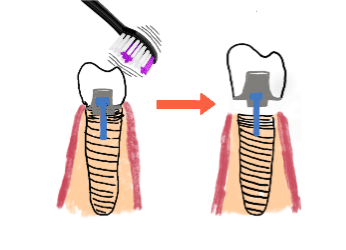
When you use a vibrating toothbrush, vibrations are created that loosen the internal screw. The crown only needs to loosen up a little to become “LOOSE.” This is a really difficult position now. As w e can’t tighten the screw since it’s covered by the crown, which is cemented on top of the post. We also can’t release the screw any further since it can’t loosen any farther without completely rotating the tooth. Separating all of the pieces in order to tighten the screw is quite difficult, and the crown will frequently need to be replaced at a substantial expense.
Pay attention when flossing around an implant
To begin, you must understand that dental implants are not the same as natural teeth. Gums are connected to teeth by a strong ligament that also contains nerves. The periodontal Ligament is what it’s termed. When flossing your teeth, make sure to press the floss into the pocket. The ligament will prevent you from injuring the region, as the nerves will cause pain is you flossing tooth hard to prevent you from injuring yourself.
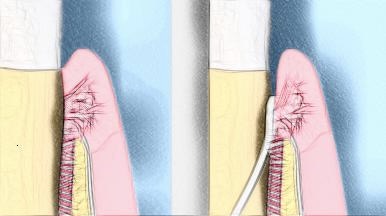
However, implants do not have a periodontal ligament connected to them. They have a seal around their implant called a Peri-implant seal. This seal is frail and lacks enough nerve supply. As a result, it is readily damaged and does not cause pain when broken. This seal will be broken by aggressive flossing, enabling germs to enter the pocket and access the bone. This, in turn, causes bone deterioration surrounding implants, which might result in the implant’s failure.
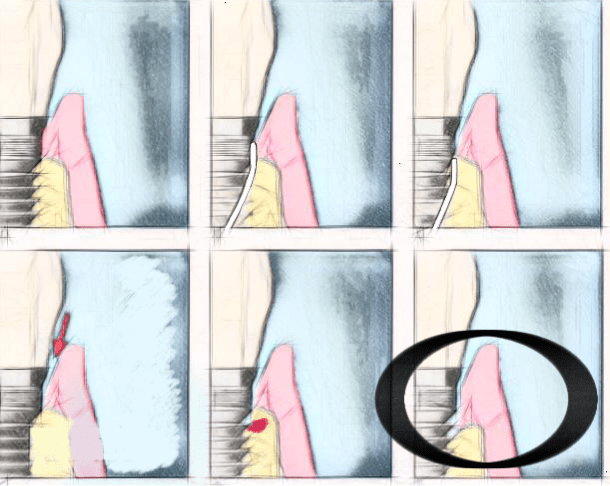
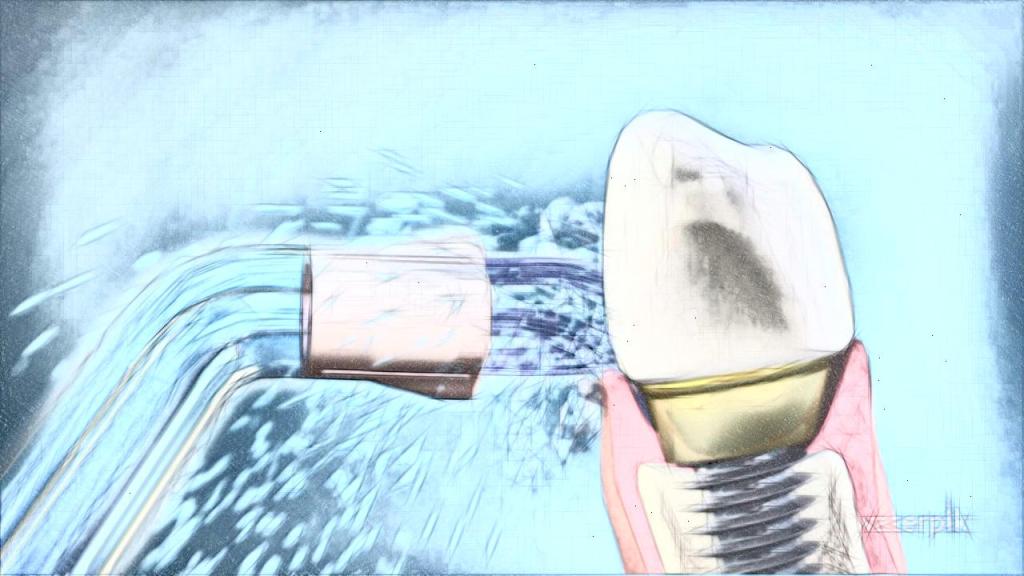
If you think you can floss around the implants without going deeper than 1-2 mm into the pocketing, go ahead; if you don’t think you have the patience or manual dexterity to do so, it’s preferable not to floss and use Waterpik around the implant instead.
Make sure your hygienist or whomever cleans your teeth is aware that you have dental implants.
When your teeth are being cleaned, the hygienist or dentist must be informed of which teeth are dental implants. Dental implant supported crowns, or simply dental implants, provide the same appearance as natural teeth with crowns. If the dental expert who cleans your teeth does not look at the x-rays, they will not be aware that the implants are there. Most will, but if they have a hectic schedule, they may just start brushing their teeth as they normally would. To avoid scratching the surface of the implant teeth, different types of tools should be used to clean them (as they are more easily scratched).They should not be cleaned with any ultrasonic or vibrating equipment (even if the manufacturer says that it is ok). Furthermore, the hygienist or dentist must take extra precautions to avoid damaging the seal between the gums and the implant by cleaning too forcefully.
Maintain Dental Hygiene Appointments on a Regular Basis
In addition to your six or four month cleaning routine, it is essential to have your implants checked at least once a year by someone who is familiar with dental implants. The bone level, as well as several other parameters such as soft tissue health and occlusion, will be assessed during this consultation. In dentistry like in many other fields, if a problem is discovered early enough, it can typically be repaired without the more catastrophic repercussions that occur when it is not addressed sooner.
Content adapted from 1888implant.com
 Dr. Mustafa Alani