On January 1st, almost all employer-sponsored dental benefit plans reset their annual limit. Money you’ve already put into your plan won’t be refunded or allocated to the following year’s plan. The unused money in your plan will go when your plan resets with the next year. As a result, it’s critical to understand how your plan or Flexible Spending Account operates.
Consider it this way, when you enrolled in your plan, you’ve already paid for a lot of dental visits. You’re paying for something you’re not utilizing if you don’t schedule them! It is similar to buying limited shelve life grocery items. if you forget it at the back of your fridge, you pretty much have to throw it away later on! Having said that, here are three extremely necessary dental procedures for which you may utilize your benefits money:
Exams and Xrays
Oral examinations are essential for maintaining long-term dental health. Your dentist will examine your teeth, gums, and mouth during your appointment. Cavities, gum recession, infections, and other indicators of tooth deterioration are all things we check for. Regular dental examinations are the most effective approach to detect any tooth issues before they become serious. Everyone should get a dental exam every six months, according to the American Dental Association.

Most of the time your dentist needs to take x-rays at least once a year. X-rays are crucial to oral health for a variety of reasons. For starters, they let your dentist to examine portions of your teeth, jaw, and mouth that he or she would not otherwise be able to see. We can identify indicators of future issues that aren’t obvious to the human eye using x-rays. We can also examine how these potential issues develop by comparing a patient’s x-rays over time. X-rays enable dentists to obtain a far more comprehensive picture of your oral health and history.
Cleanings
I recommend that everyone get their teeth cleaned professionally at least once every six months. Everyone may benefit from a professional cleaning, regardless of how well they care for their teeth. Dental plaque forms naturally in your mouth when you eat sweet or starchy meals. It covers your teeth and burrows into difficult-to-reach spots. Plaque hardens into calculus and tartar over time, which is impossible to remove with a toothbrush or floss alone. Cavities, gingivitis, and other more serious dental issues like periodontitis can be caused by plaque build up.
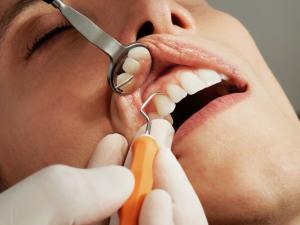
Calculus that has grown up inside your mouth is removed by your Hygienist. during this procedure the Hygienist can reach regions that are tough for you to clean properly with scalers and other instruments. We’ll also discuss tips on how you may properly clean and care for your teeth. You can relax knowing that your mouth is clean, sanitary, and healthy after a dental cleaning. Periodic dental cleanings are covered by almost all dental coverage plans.
Cavity Fillings
Because cavities are so frequent, fillings are one of the most common operations dentists do. Cavities occur when a hole in the enamel of a tooth is created by dental decay causing bacteria. They expose the tooth’s fragile inner dentin to decay, illness, and structural harm. Fillings restore the tooth’s original form and function. Fillings not only fill holes created by bacteria, but also protect them from additional harm that can lead to pain. Fillings are very simple to apply and are usually covered by dental insurance. Tooth-colored fillings are almost undetectable since they mix in with the color of your teeth.
Fillings are generally placed in a single visit that lasts 30 minutes to an hour, and patients can eat and drink as soon as the numbness subsides. It’s critical to fill cavities while they’re still tiny, since if you don’t, they’ll just become worse. By addressing the issue now, you’ll be able to avoid numerous more serious dental issues in the future. All the more motivation to take advantage of those perks!
 Dr. Mustafa Alani